
3 Easy DIY Garden Trellis Ideas for a Productive Vegetable Garden
One of the quickest ways to get more out of your garden is to start growing upward.
A good garden trellis doesn’t just save space. It can improve airflow around plants, help reduce disease and rot, make harvesting easier, and allow more sunlight to reach your fruits and vegetables.
The downside is that garden trellises can get surprisingly expensive.
When I started building our vegetable garden this spring, I had already spent a small fortune on soil, irrigation, and materials for nine raised beds. The last thing I wanted to do was spend hundreds more on trellises.
So naturally, I started making my own.
None of these DIY garden trellis ideas are particularly fancy. In fact, one of them is made entirely from scrap wood I found in my garage. But they’re functional, budget-friendly, and so far they’re working beautifully.
Here are the three types of DIY garden trellis I built for our garden this year.
Why Use a Garden Trellis?
But first, before we get into the projects, let’s talk about why a garden trellis is worth the effort.
Many popular garden vegetables naturally want to climb. Cucumbers, peas, pole beans, loofah, melons, and tomatoes can benefit from vertical support.
Growing vertically offers several advantages:
- Saves valuable garden space
- Improves airflow around plants
- Makes harvesting easier
- Helps prevent fruit rot
- Reduces pest and disease issues
- Allows plants to receive more sunlight
1. Simple Cattle Panel Garden Trellis
This is probably the easiest and most versatile garden trellis I have built.
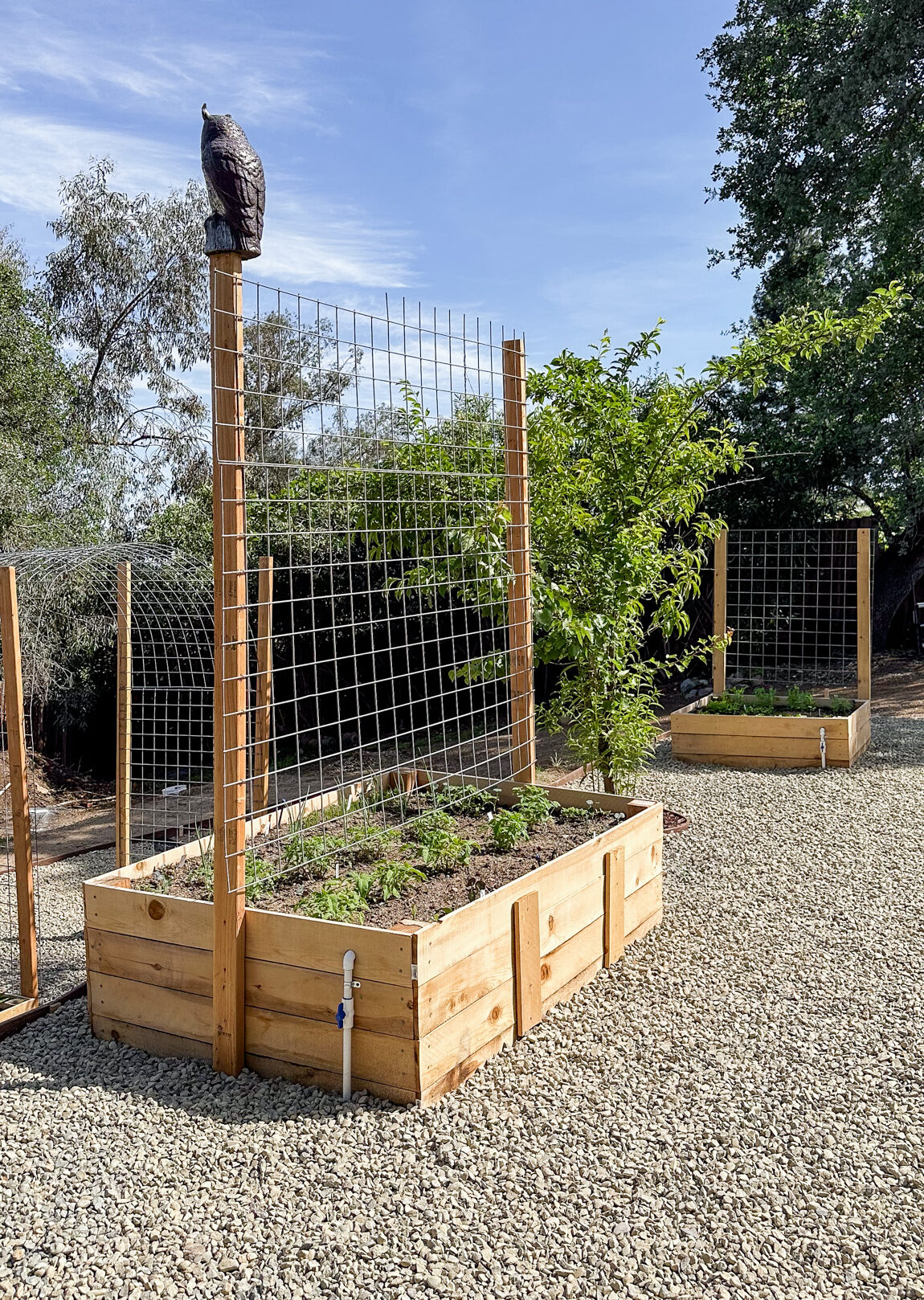
I attached 2x4s vertically to the sides of my raised beds, then cut cattle panels to size using large bolt cutters. Once the panels were cut, I secured them to the 2x4s using U-shaped fence staples.
That’s it.
The entire project took me about four hours, and most of that time was spent measuring and hauling materials around.
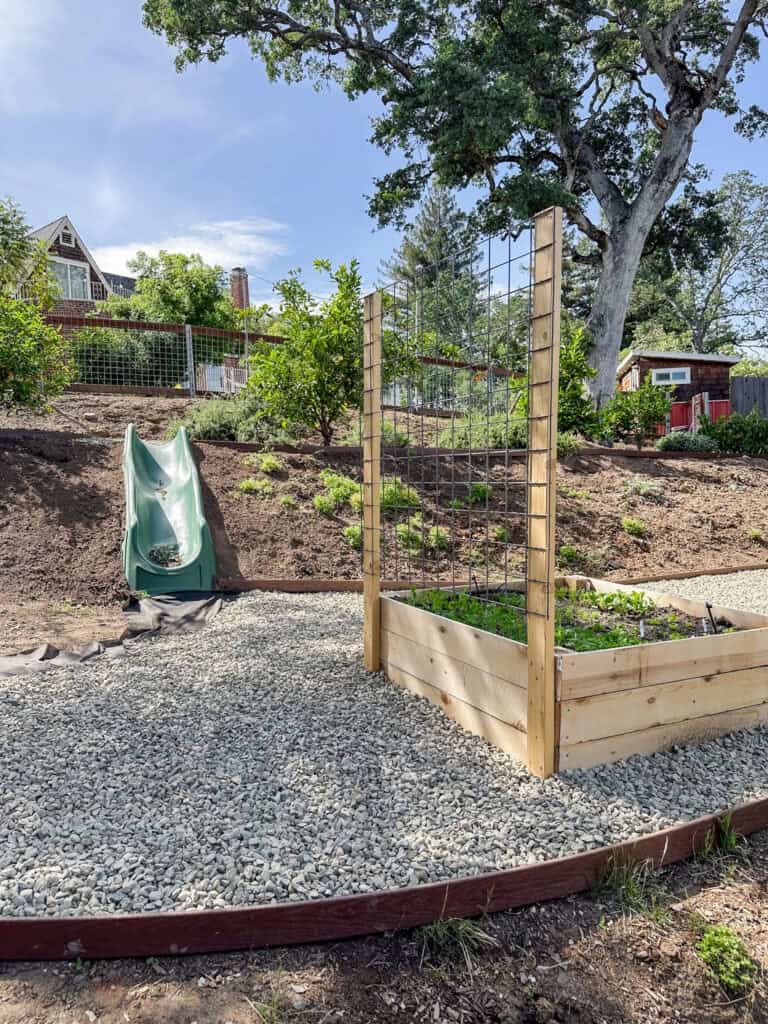
One month later!
Best For:
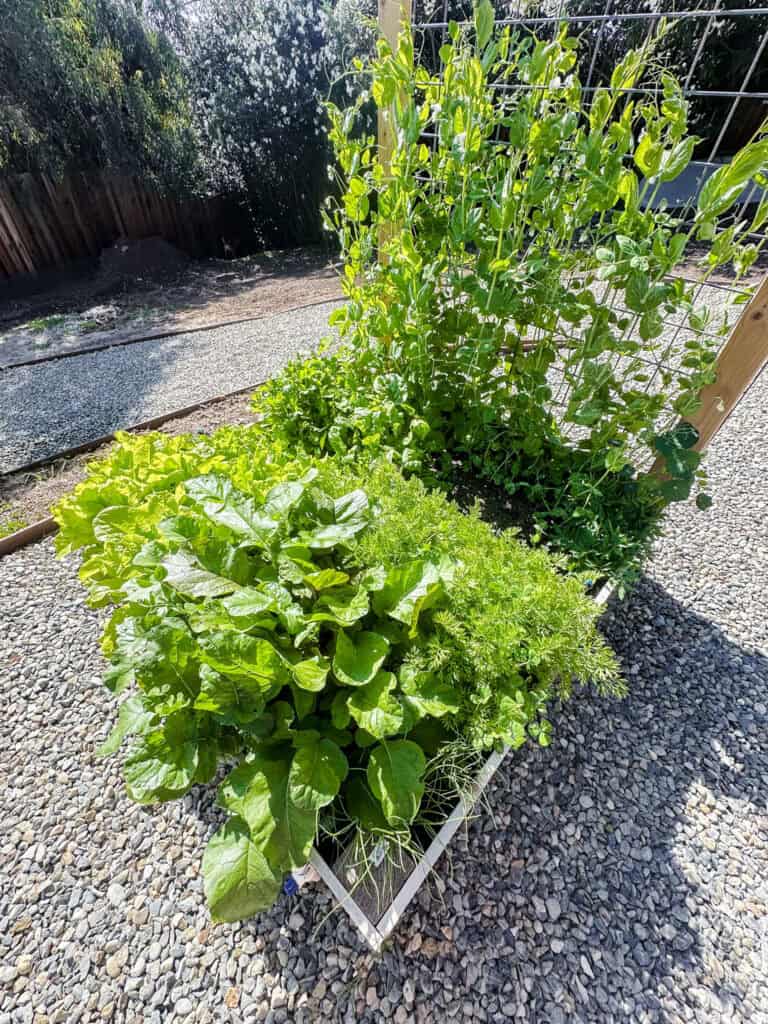
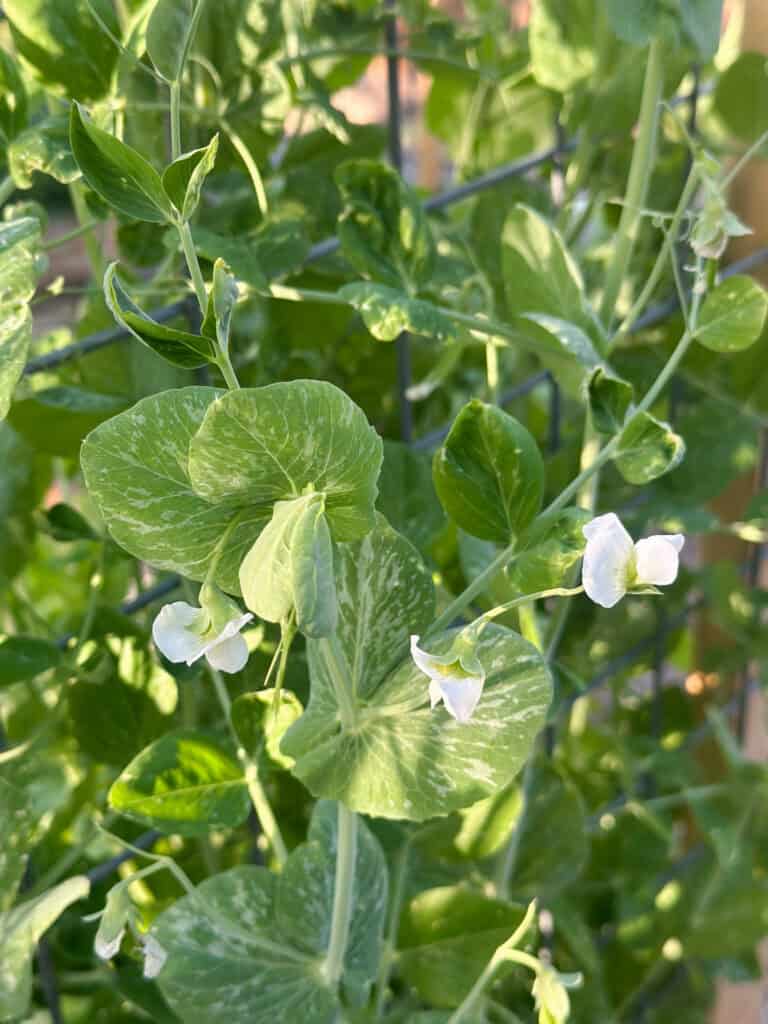
- Snap peas (so pretty)
- Pole beans
- Cucumbers
- Tomatoes
- Small melons
Pros
- Extremely sturdy
- Relatively inexpensive
- Easy to build
- Can support heavy crops
- Lasts for years
Cons
- Industrial appearance
- Requires bolt cutters and the ability to get cattle panel. (Check out your local Tractor Supply if you have one.)
I built one smaller trellis for my snap peas, which immediately took off and started climbing before I had fully convinced myself I knew what I was doing. They are now burning in our Northern California summer heat, so I need to harvest and replant something better suited for our extremely hot summers.
I also built a very tall version for my tomatoes.
Historically, I’ve always grown tomatoes in cages, and I wasn’t entirely convinced this trellis would work. My tomato plants are currently enormous, dense, and slightly out of control. At the moment they’re being held upright by the cattle panel and a generous amount of garden twine. But I clearly overplanted. If your tomato plants aren’t this dense, you shouldn’t have this issue.
For mine, I am not sure what to do as they are healthy and producing green tomatoes at the moment, so I don’t want to thin anymore. I’ll probably just see what happens this year and make adjustments next year.
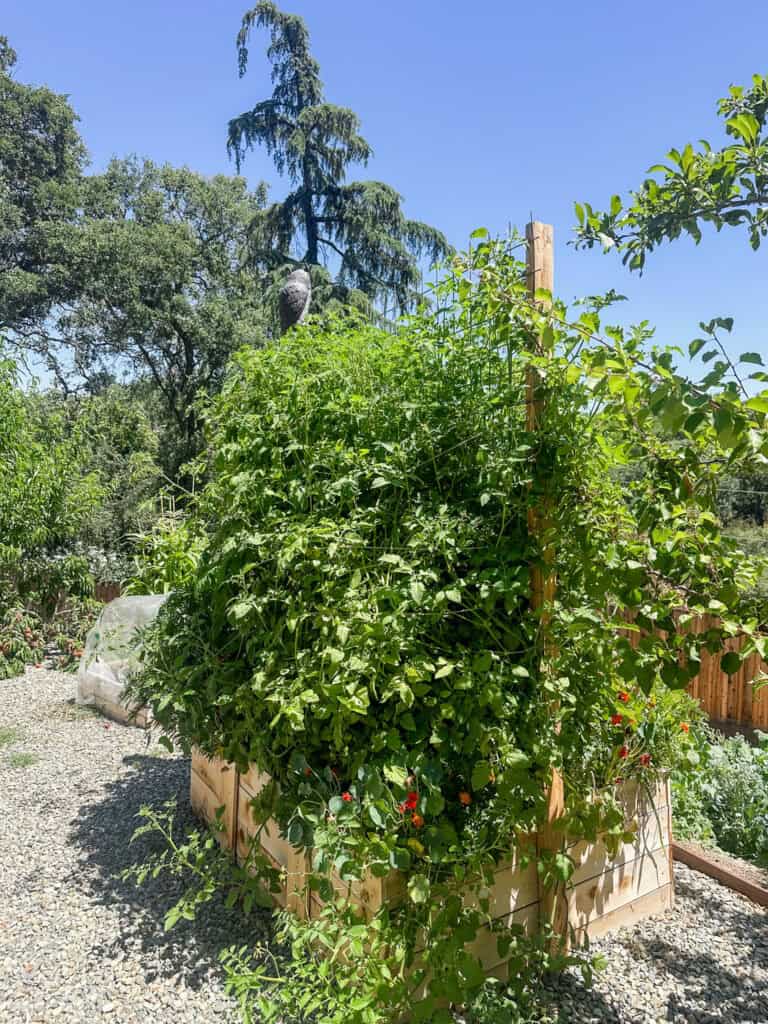
I may switch to a teepee-style support next year and reserve these larger cattle panel trellises for crops that naturally climb, like cucumbers and pole beans.
For now, though, the tomatoes seem happy enough.
My husband remains mildly concerned about the fact that it’s June and there aren’t any ripe tomatoes yet.
I keep reminding him that patience is an important gardening skill.
If you want to see how I build these raised beds, read this article next!
P.S: The faux owl has really helped protect my beds and fruit trees so far!
2. Cattle Panel Garden Trellis Arch
Out of all the projects I tackled this year, this one might be my favorite.
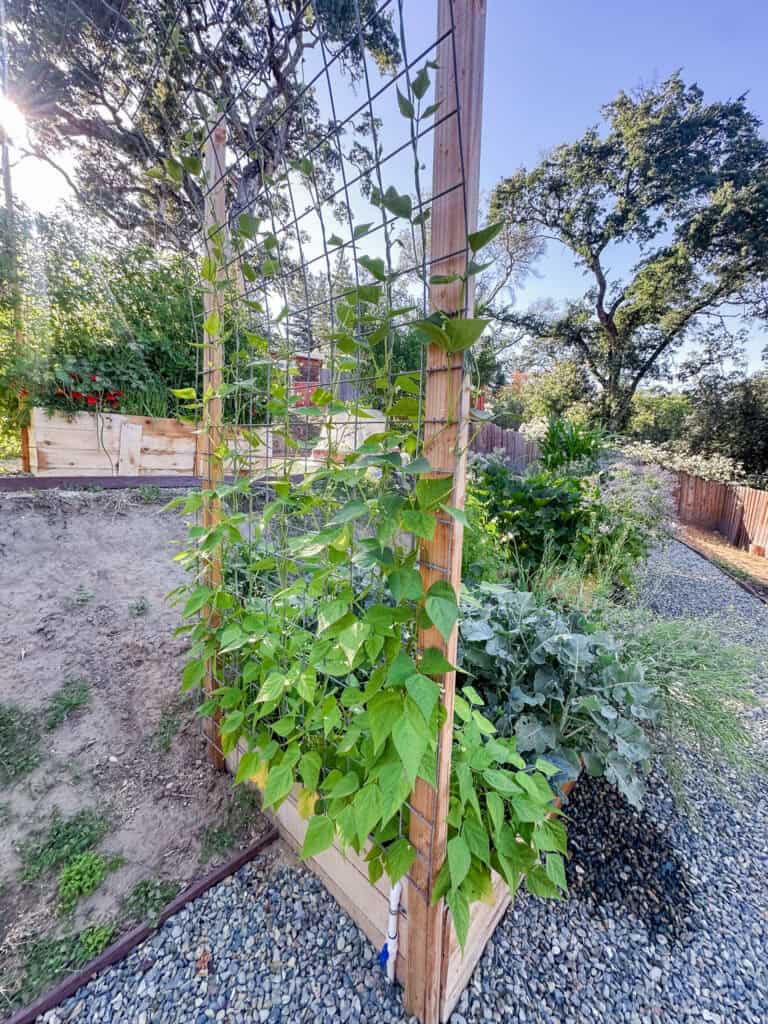
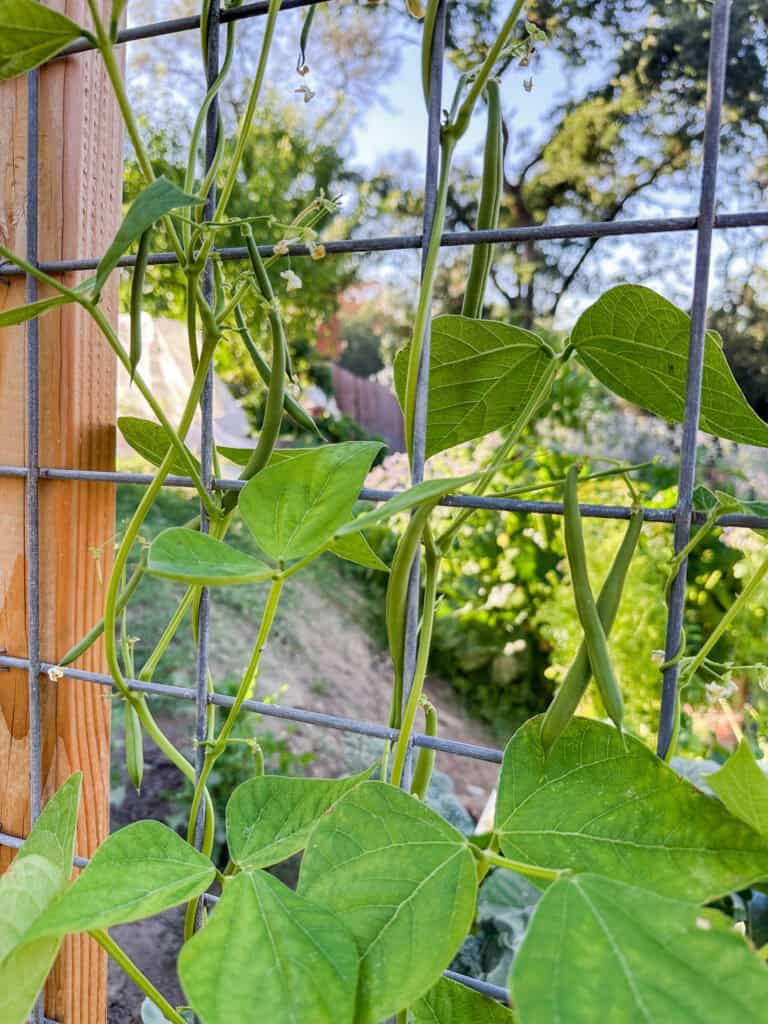
I created a garden trellis arch between two raised beds using cattle panel. My goal was to grow cucumbers up one side and pole beans up the other, eventually creating a living tunnel of greenery.
At least that’s the vision.
Right now it’s mostly metal with a few ambitious vines making their way upward.
But I can already tell it’s going to be beautiful.
For the first part of spring, I even hung wind chimes from the arch. The plants are growing so quickly now that I’ll probably have to relocate them soon before they become part of the harvest.
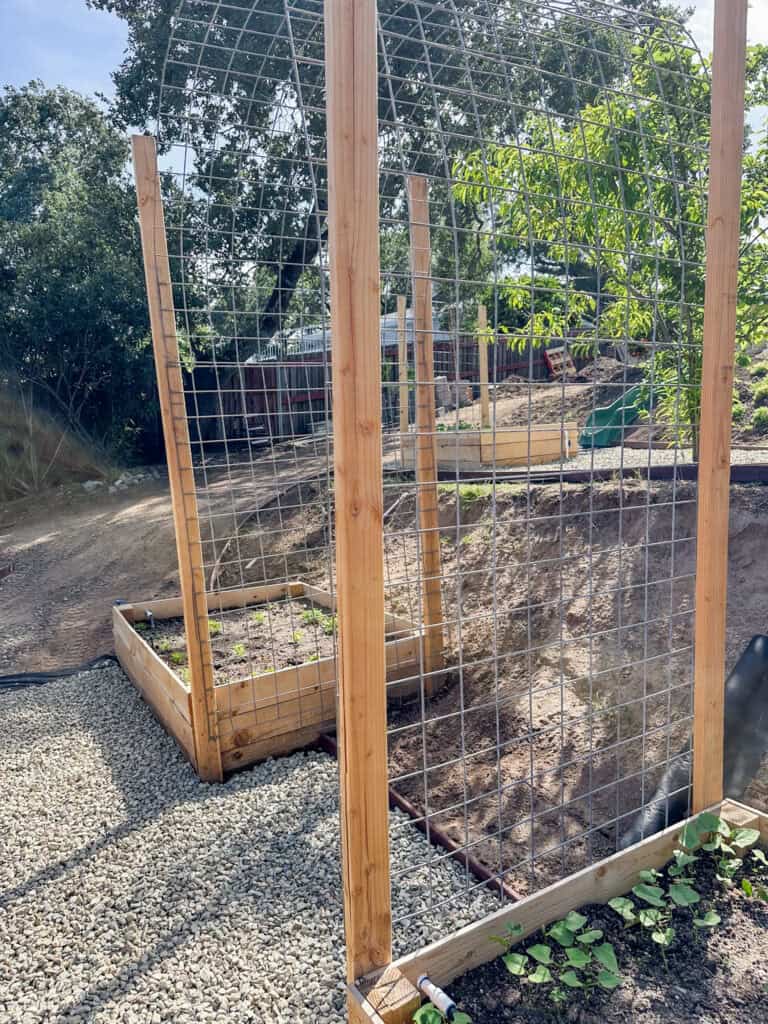
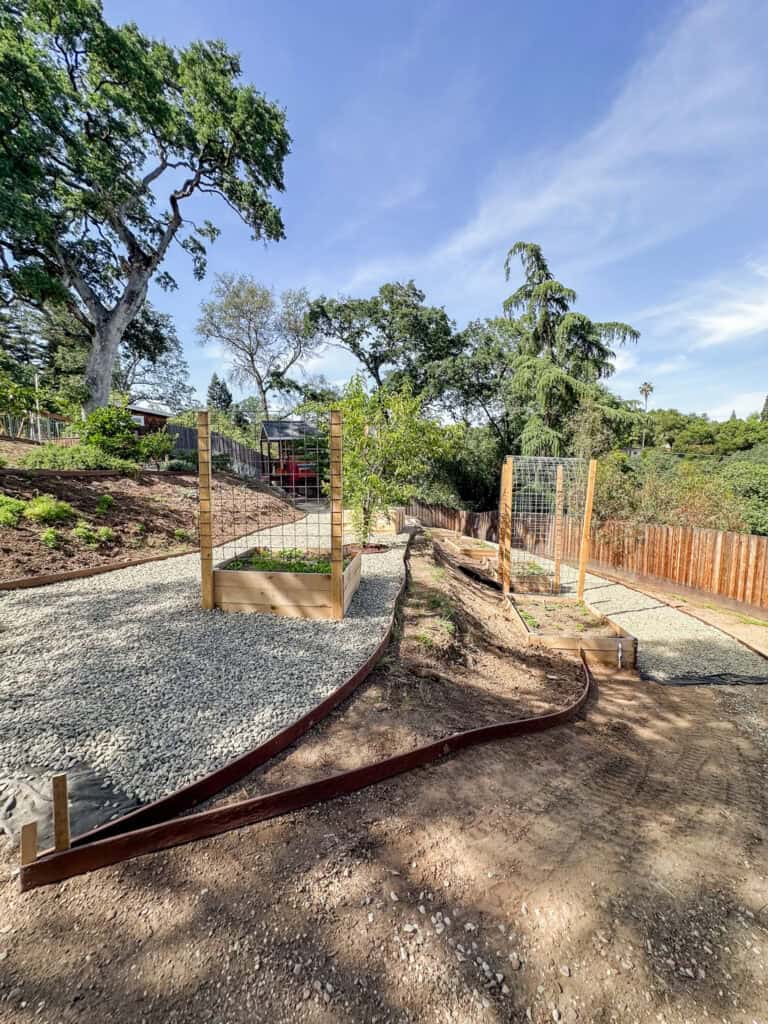
Our tiered garden in progress with a few of both trellis styles.
Best For:
- Pole beans
- Cucumbers
- Peas
- Decorative gourds
- Small melons
Pros
- Beautiful focal point
- Maximizes vertical space
- Easy harvesting from both sides
- Creates a garden feature as well as plant support
Cons
- More difficult to build
- Requires space between beds
- Can be tricky to install if the beds aren’t perfectly aligned
And mine definitely were not perfectly aligned.
The raised beds had already been placed when I started building the arch, so I spent a fair amount of time twisting, adjusting, and generally negotiating with the cattle panel to get it into position.
It wasn’t exactly a precision engineering project.
Still, we got there in the end.
One thing I intentionally did was leave my 2×4 supports attached in a way that allows me to change my mind later. If I decide the arch isn’t the best long-term solution, I can easily convert both sides into separate upright trellises.
For now, though, I absolutely love it. But ask me again in August when I’m trying to harvest cucumbers from the top.
3. Scrap Wood Lattice Garden Trellis
This final garden trellis is proof that sometimes good enough is actually good enough.
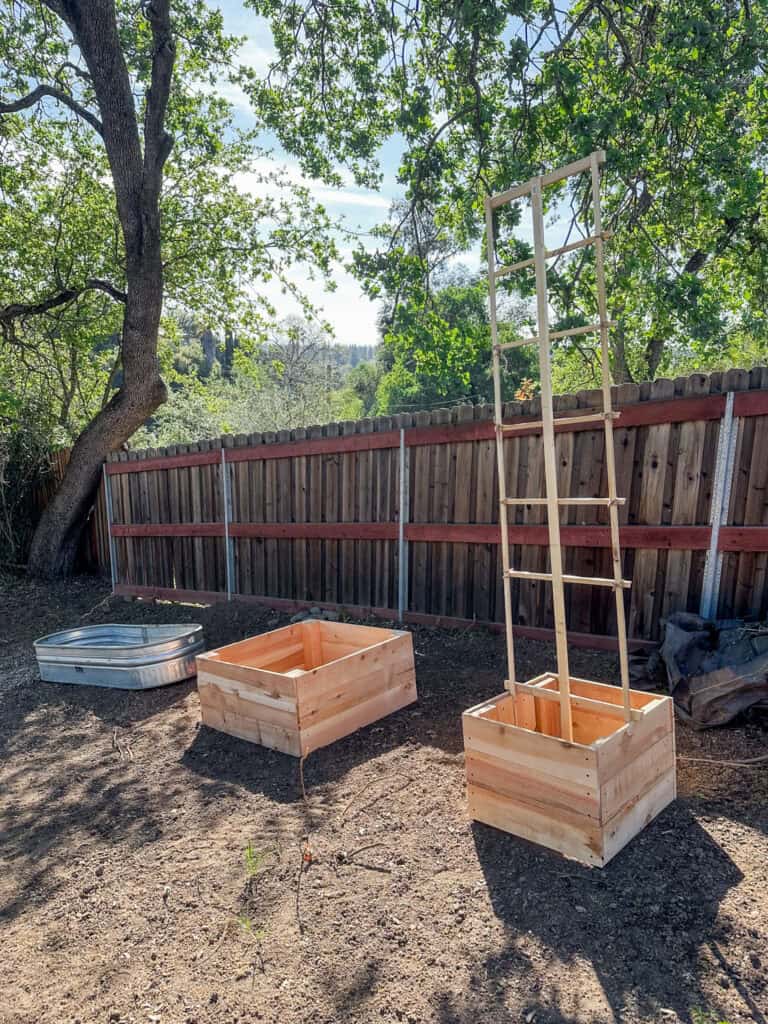
I built it entirely from leftover wood scraps I already had in the garage. Some pieces were trim boards. Some were old 1x2s. A few pieces may have been leftovers from projects I no longer remember.
The point is that it was free.
The trellis itself is a simple lattice design attached to a raised bed that was also built primarily from leftover materials.
Is it perfect?
Not even a little.
Is it functional?
Absolutely.
This particular trellis is destined for loofah plants.
I haven’t actually planted them yet because life became extremely busy over the last few weeks, but the plan is to grow enough loofah gourds to eventually produce our own natural dish sponges. And I’m irrationally excited about this.
Best For:
- Luffa
- Lightweight vines
- Decorative climbers
- Sweet peas
Pros
- Nearly free with scraps
- Customizable
- Easy beginner project
Cons
- Not as strong as cattle panel
- Shorter lifespan
- May need repairs over time
The thing I love most about this trellis isn’t how it looks. It’s what it represents.
My goal with this garden has never been perfection. My goal has been to create a productive, functional space without spending a fortune. If I can build something useful from materials I already own, that’s a win.
More Garden Trellises to Come
Eventually, I’d love to build a beautiful arched garden trellis at the entrance to our vegetable garden and cover it with climbing roses.
Unfortunately, this year I was busy reclaiming a wild backyard, building nine raised beds, installing irrigation, hauling mountains of soil, and attempting to grow enough vegetables to justify all of those decisions. And now it’s June, and we’re officially in triple-digit heat, so the rose-covered entrance will have to wait until next spring.
And honestly, that’s okay. One thing I’ve learned from both gardening and home projects is that good things take time.
For now, these simple DIY garden trellis projects are doing exactly what I need them to do.
They’re supporting healthy plants, maximizing growing space, and helping turn an overgrown corner of our yard into something productive.
That’s more than enough for one season.
Happy gardening, friends.



Join the List
Stay up to date & receive the latest posts in your inbox!